Thursday, December 25, 2008

#1

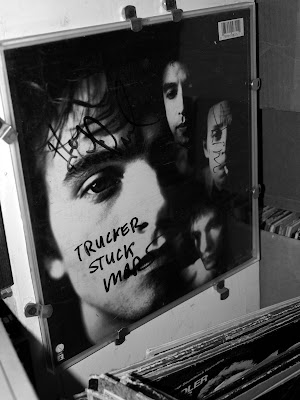
Portishead, Third (Mercury/Island)

There was no reason to expect that Portishead would ever be relevant again. They'd had their heyday, inspired a decade or more of electro-acoustic mood music perfect for shopping or sipping caramel macchiatos (that music's blandness is not Portishead's fault), and promptly faded away. Fait accompli, right? And even if Adrian Utley, Beth Gibbons and Geoff Barrow were to reunite, they'd only be banking on past glory (box), right? Well, not so fast, it seems. A decade removed from their last perfomances together, the trio decided they still had something vital to offer, and lo, they were right.

Third is distinct from both of their previous studio albums, as well as their 1998 live release. They have sloughed off all signs of trendiness: gone are the scratches, the spy soundtrack samples, the vague '90s-ness of it all. What remains is the remarkable density of their sound, a deceptively smooth-seeming yet incredibly complex construction of live instrumentation and electronic augmentation. And still present is Beth Gibbons' voice, at once so strong and yet so vulnerable, the wounded ingenue, a singing style seemingly torn from a time now decades past (when I first head Dummy, almost FIFTEEN YEARS AGO, I was convinced the vocals had been ripped from a dusty 78 the producers had found at a rummage sale somewhere). But otherwise, so many references to who Portishead once were have been scrubbed away that Third represents an incredible act of reinvention.

In the past Portishead had, despite its air of longing and desperation, the ability to lull listeners. For all its inventiveness, this was ultimately the calling card of trip hop, the genre Portishead were said to have helped found: the easy tempi were for sipping beverages, for kicking back; for chilling. But Third is less Blue Room in a London club than it is Berlin warehouse-cum-sound-studio. It bristles, crackles, bucks and pushes. It unsettles. First single “Machine Gun,” with its rapidfire drum machine beat, is unapologetic krautrock. “Magic Doors” is backed by a wash of psychedelic tape-splice sound.

Third is so breathtakingly strong, so intricate and dark that it demands a rethink of Portishead's relationship to their earlier work. They were, I think, further ahead than we realized, more innovative and less interested in creating “a sound” than they were in exploring the possibilities of Sound. Dummy and Portishead suggested it, and Third has at last confirmed it: a familiarity with Portishead is essential to understanding the state of the art of music in the first decades of the twenty-first century. For most of us that century began about 7 or 8 years ago (probably it began on September 11, 2001, just as the twentieth century effectively began on June 28, 1914), but for Barrow, Gibbons and Utley, it started nearly a decade earlier, when they began their work together. The question is whether or not they can remain ahead of the curve, and what sort of art will result from their prescience. For the time being, we have Third, and we are fortunate, because Portishead could have easily called it a career ten years ago, when it seemed as though they had nothing left to prove.

Wednesday, December 24, 2008

#2

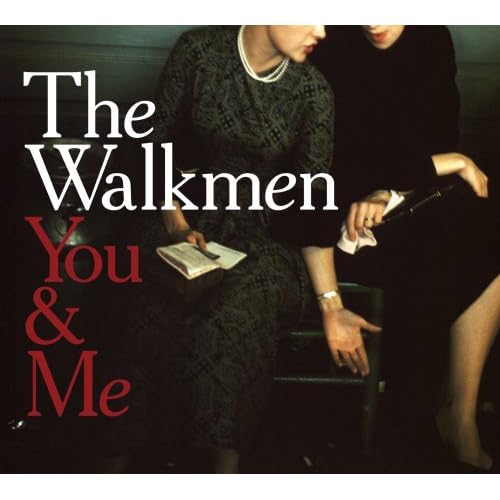
The Walkmen, You and Me (Gigantic)

The buzz of a guitar's reverb in the skin of a drum, the rattle of a kick pedal as secondary percussion, the cracking of Hamilton Leithauser's voice at just the right moments, the rich hum of the organ... these are the subtle aural pleasures of You and Me. The intellectual pleasures are perhaps more acute; like a persistent stitch in your side, the Walkmen are here to remind you that aging isn't easy, and sure as hell isn't pretty, but it's unfailingly poignant, and real to boot. Y+M is an album-length rumination on that abrupt transition when you realize that you don't care if you look your age, because a) you can't be bothered anymore, and b) maybe there's an iota of dignity in not being 26 (or 29) anymore. The Walkmen sound tired, properly tired, and that results in a dropping of affectations. It sounds right, because damn it, who among us isn't weary? One foot in front of the other, we'll get by. They've been listening to Leonoard Cohen – we've got the proof right here – and they sound like it, courting melancholy and mule-headed hopefulness (the impossibly pretty “Canadian Girl”) in equal measure. When an album keeps its hat on for so much of its running length, the outbursts are all the more startling and meaningful. You and Me is a magnificent, well-tailored coat with fraying cuffs. It is elegant and desperate.

And then there's “On the Water,” which is about as perfect a song as I've ever heard. Its muted shuffle-step opening perfectly evokes, as Leithauser sings, “walking down this dirt road, watching at the sky, 'cause it's all I can do.” And when, at about the 2:13 mark, the song erupts like a shower of sparks, your heart does likewise, because you feel in an instant that you have permission to shout, ragged-voiced and pop-veined, every last damn thing that you've held back since things started to appear in your mind's rearview mirror. It is the wedding speech you've always wanted to give, the eulogy you hope to one day deliver, your tie askew, to a room full of gape-faced people. “On the Water” knows that you could have been somebody, and You and Me says you might be yet, but either way you'll have these songs; songs like heirlooms, songs like friends.

Tuesday, December 23, 2008

#3

Bon Iver, For Emma, Forever Ago (Jagjaguwar)

Every great album needs an equally great creation story, the myth of its genesis, the raw material of its run at immortality. For Emma, Forever Ago passes that test. Specifically, it is the end result of a broken relationship, a disbanded indie-folk outfit, and a period of intense isolation in the snow-driven Wisconsin woods. Justin Vernon, who adopted the Bon Iver moniker as a manglicized version of the French for good winter, endured a run of bad breaks, like many of us do, and reacted in a way that more of us should: he turned it into something of lasting value. Alone in that cabin, he might have made the worst sort of moping bedroom folk, but instead was able to hew something from the ice and wood and solitude that can only be called backwoods soul. His multitracked falsetto shimmers like windowpane frost, etched delicately atop solid rhythms punched out of an acoustic guitar, and spiced with a few horns, some spare drums and the odd electric guitar twang. There are the inevitable Iron & Wine comparisons, and they're valid, but only if you mean the mature Iron & Wine, as on The Shepherd's Dog, where the hushed folk plucking is seasoned with a broader musical palette. For Emma... is a lush, beautiful listen, the sort of album that worms its way into your life so that you find yourself conforming to its rhythms; background listening becomes focused listening. The strength of this record is in its ability to hold your attention, and I think it does that because of its unique genesis. It seems obvious to me that Vernon was writing and recording these songs for himself first and foremost, and that makes us spies on a series of very private moments. When an artist is this naked, the product can't help but prove compelling.

Monday, December 22, 2008

#4

Angles, Every Woman is a Tree (Clean Feed)

For a nation of nine million souls, Sweden has placed a proportionally high number of albums on this list – Love is All, Bengt Berger, and the Raveonettes have already achieved the great distinction of being named TiOM top 25ers. Add alto saxophonist Martin Kuchen and his latest project, Angles, to that number. Every Woman is a Tree is a stark and dark, Matthias Stahl's vibraphones darkening the corners of this roiling live collective improvisation. This is free music as Freedom Music; protest and dissent circa now. Thou ancient, thou free rouses Sweden's national anthem; this sextet certainly bears that second part to heart. The performances are tense and tight, the tunes aren't frothy but have enough head to satisfy. All of it adds up to my favourite free/improv/jazz recording of 2008 (that it came from an artist and group I'd never before heard of makes it all the more pleasing). ((And once again, Clean Feed proves itself one of the most interesting labels out there.))

Sunday, December 21, 2008

#5


Wolf Parade, At Mount Zoomer (Sub Pop)

Not to repeat myself, but I was prepared to be disappointed by the follow up to the immensely satisfying Apologies to the Queen Mary. Well, I needn’t. At Mount Zoomer is almost completely devoid of a single, lacks the “naive, anthemic bluster” of its predecessor, rocks just a little bit less than …Queen Mary, and comes packaged in one of those shitty paperboard sleeves that’s impossible not to damage the first time you open it. Which is all to say that it’s just as good as Wolf Parade’s debut. I’d stop short of calling it better, because as debuts go, theirs was stupefyingly good. Zoomer is more of an album, though, in that it hangs together all of a piece, and several songs feel as though their primary purpose is to set a tone for the big set pieces (California Dreamer, Kissing the Beehive). All in all, it’s compelling, the rare album demanding a front-to-back listen in a way that’s commendable – weren’t we supposed to have witnessed the death of the album several times over by now? Wolf Parade didn’t make a second installment of their debut, though that would have been an achievement in itself. What they did instead was to grow up a bit and produce an incredible record shorn of the urgency of its antecedent, but one which is nevertheless deeper, more nuanced, and more patient. In short, they followed up one triumph with another, completely different one. I can’t wait to see what they do next.

Saturday, December 20, 2008

#6


The Raveonettes, Lust Lust Lust (Vice)

I hereby nominate the Raveonettes to score every future David Lynch project, and while they’re at it, why not go back and provide new music for everything he’s already done? Those would be DVDs worth shelling out for. On Lust…, the ‘nettes seem to have clarified their purpose, shedding much of the bloat that troubled their last long player, and rededicating themselves to their role as recombinant masters of American Kitsch (as is so often the case, it takes outsiders to perfect this shit); promoters of trash as high art. With songs that flare up like magnesium, mechano-drums, robo-Swede vocals and fuzzy, tinny guitar, Lust… is perfect homage to the art of rock & roll self-invention. Harmonized vocals lie like bedrock beneath spiky guitars, and Buddy Holly smiles from the great beyond. So might Luxe Interior, if he were dead. Like Mulholland Drive, there’s a chance I’m not understanding everything that’s happening here, but I’m sure as hell enjoying it. Now, how about it: The Raveonettes do Blue Velvet?

Friday, December 19, 2008

#7


Frightened Rabbit, The Midnight Organ Fight (Fat Cat)

Nervy, rollicking, convulsive alt-folk-indie-rock. The best thing going in Scottish guitar pop. Equal parts hope and despair. Lush, tic-driven, and catchy. Hum it when you’re up, bellow it when you’re down. [Aw, jeezus, does anybody actually read this stuff?]