Wednesday, April 20, 2011

Swan Song


TIME TO MOVE ON: For over four years I've made this my soapbox for musical matters, and you've graciously let me prattle on. It started as a place to post lists, but it became something more. At its best, it facilitated conversation; at its worst, it became a chore. But it was mine, and you shared it with me, and I've enjoyed that. I hope you have, too.

But it has begun to feel a bit shabby, a tad cramped, and like it just doesn't quite suit anymore. So after a bit of searching, a lot of consideration, and some negotiation, I've found a new place, and I hope you'll join me there.

The new address is THISISOURMUSIC.CA . Come on over, the party is already well underway.

Wednesday, January 12, 2011

#s 5-1 (at long last)


How has a simple 30-point list become a grueling month-long odyssey? That's what happens when you're motivated by warring impulses, namely "Give the people what they want!" and "Always leave them wanting more!" It's complicated.

But it all comes to a head today, crowned by what my wife considers a very specious choice (did i just undersell the whole thing?). But if she has problems with it, she's welcome to start her own music blog, as are you all.

Ta-da!


5. Spoon, Transference

A grower. No secret that Spoon are one of the most dependable bands around. They got relatively accessible on Gimme Fiction, then got a bit more spiky on Ga Ga Ga Ga. Now they're riding a groove. This album is very good on listens one through five, fantastic on listens six through ten, and thereafter it becomes one of the best things the band have ever done. Time-released greatness.


4. Warpaint, The Fool

Art-rock that tastes like a careful blend of Jefferson Airplane and moodier Sonic Youth circa Experimental Jet Set Trash & No Star. No? Grab your "Bull in the Heather" cassingle and throw it into a bruised and damaged tape deck, then see if it doesn't sound a bit like the first side of this album. I speak in terms of "sides" because the scuttlebutt on this long player is that it drops in quality on the second half. So say the blogs, anyway. But I'm not really feeling that. I think side one sets a tone and side two rides it.

The women of Warpaint have locked onto a sound -- Mazzy Star with the training wheels removed -- that works to their strengths. The space between the spongey bass and the workaday drums forms an echo chamber into which they may drop their ethereal vocals (not like Enya ethereal, but ethereal nonetheless). Elsewhere the guitar skitters around, looking for a wormhole to wriggle through. All in all, a lovely set of warm, trippy dirges, lysergics not included.


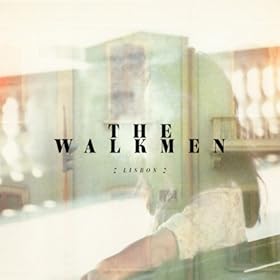
3. Walkmen, Lisbon

I'm buying whatever these guys are selling at this point, frankly. I know there's nothing more sad than when a guy claims to understand a band, or that they're speaking directly to him, or soundtracking his life, or whatever, so I'll spare you all that, and in so doing avoid comparison to, say, that woman who comes into my store every so often wearing a black fedora and one white sequined glove, asking if MJ's estate has issued anything new. Sad, right?

But you get to a point where you think you've found life's sweet spot, the meaty middle where the things that interest you would've bored the younger you to death. Where things are painful and complicated, but all so very real that you're never once tempted to turn your head and look away. The point when your days seem like service to some debt you can't quite quantify, and yet there's a vague sense of satisfaction in all of it, like you're at work on a very complex project, the fruit of which you can't yet envision but which nonetheless tantalizes.

And the Walkmen? They seem to get that. All that. Every bit of frustration and each small payoff. It's all there in Hamilton Leithauser's voice, in the organ and the guitar and the bass, in the lyrical drums, and it runs through the lyrics, too. The small hits of bouyant joy ("Juveniles") are counterpoint to pretty much all of 2008's You + Me, and they feel like those oasis-like moments in the middle of your day when you forget everything else to focus on a shaft of sunlight.

Lisbon is another entry into a beautiful and ragged catalog that I'll probably be thumbing for years to come (you've been forewarned). It, like everything this band has done thus far, came along at the right time in my life, and thank God for it.


2. Dave Douglas, Spark of Being: Expand

Might be that Dave Douglas and Joe Pernice are fighting it out for the title of most TiOM list appearances (might be -- I'm too lazy to actually tally the figures). The man's a perennial lock, it seems, because he keeps churning out more and more legacy-securing discs like this one. They always sound like "What Miles and his band would've sounded like if..." but that tag is getting worn, so I won't apply it. This time around Douglas leads his Keystone band into experiments based on music they'd earlier produced that served as soundtrack to a film called Spark of Being, which in turn drew its themes from Mary Shelley's Frankenstein. You with me? What results is much the same as what Keystone has produced in the past, namely warm, hard-chugging and perfectly airtight neo-fusion. What's remarkable this time is the lyricism that pours from Douglas' trumpet; he sounds more delicate and pretty than he has since his Tiny Bell Trio and Charms of the Night Sky days. The animating theme here is the connection between science and humanity, and the conclusion seems to be the inescapable nature of our vulnerability; we are fragile packages, redeemed by beauty, humanity, delicacy. That sentiment seeps from every note of this wondrous recording.


1. Superchunk, Majesty Shredding

Superchunk were already mid-career when, on Halloween, 1999, my wife (then girlfriend) and I traveled to Montreal to see them play at a venue I can't now recall. How long ago was that? Well, they were costumed, and drummer Jon Wurster was done up like Fred Durst of Limp Bizkit infamy (backwards red Yankees cap, a t-shirt that read FUKIN GONUTS and a red puffy jacket), and it counted as a current reference. Do you remember a time when anyone cared who Fred Durst was?

Anyway, Superchunk were touring in support of Come Pick Me Up, a mid-career record if ever there was one. In fact, it sounded almost late-career back then, the band having already secured elder-statesman status in the indie rock world. It was a record characterized by more intricate production, hushed vocals and varied instrumentation -- all pretty heady stuff for a band that made their name shouting "Slack Motherfucker!" into the faces of Chapel Hill punks. It was a good album, but a bit of me worried, on the drive from Ottawa to Montreal, how it would play live. They opened with "Hello Hawk" off that record, and my doubts were laid to rest. Where the album version was a bit restrained, live it was a squawky shout-along. There was a kid in the front row wearing a stuffed hawk on his head, and he was pumped, man.

The show was amazing (even though the girl at the merch table thought I said EXTRA large, so the t-shirt I went home with ended up being my GF's nightshirt), and the sounds and images of that night were what I called upon to make sense of 2001's Here's to Shutting Up, which continued down the path started by '97's Indoor Living and the aforementioned Come Pick Me Up. They'd get ultra-bored, I reasoned, making the same old records, even if the same old shows are just as cathartic and exciting as ever. Then they went on hiatus. Mac McCaughan and Laura Ballance were busy running their label, Merge, supplying the world with the millions upon millions of Arcade Fire CDs we all needed to make sense of our post-9/11 lives. Drummer Wurster filled time making comedy records, and bassist Jim Wilbur, who is the quintessential rock bassist in that he looks like a math teacher, did I don't know what.

But now here is Majesty Shredding, nine years after the last full length, and about a half a world away. This is a band in late career sounding like a version of themselves from twenty years ago. Not sounding like they're trying to sound like their younger selves, mind you. Note the distinction. This is a convincing evocation of those early records, a return to early-mid-'90s form. The vocals are shouted, the two guitars snake about one another, the drums are bashed, and the hooks are catchy. These songs would, for the most part, fit right in on vintage Superchunk albums No Pocky for Kitty or On the Mouth.

So why bother? Well, good question, but probably a moot one. Music like this exists solely for its own sake; nobody's trying to force it down your throat, or onto playlists, into heavy rotation, or turn it in to ringtones. You like it or you don't. The obvious selling point is that the band themselves are clearly enjoying the act of making it, to a ridiculously infectious degree, but they're not trying to change the world with these songs.

Nope, fact is the world doesn't really need more plain old indie rock like the kind Superchunk once made and are making again. But I sure as hell do.

Monday, January 3, 2011

#s 10-6


Top ten! Truthfully, I long ago dismissed as fantasy any notion of having this all done by January 1st. It just wasn't going to happen. Having embraced this realpolitik, I found I actually slept more soundly, enjoyed food more, and treasured human connections to an even greater degree. It was liberating. That said, maybe we can wrap this up by week's end? No promises, of course. Onward...


10. Frightened Rabbit, The Winter of Mixed Drinks

The endless cavalcade of priceless Scottish pop continues unabated. The title alone makes this one worthy of mention. The band have tightened up their sound since their last (TiOM-listed) effort, which has them sounding like... what? I'm looking for one of those handy comparisons I'm so fond of employing. How about: Aztec Camera by way of Orange Juice?


9. Vampire Weekend, Contra

Remember when the debut dropped, and these popped-collar prep boys seemed bent on proving themselves the coolest of all the '80s-quoting hipsters? Ha, turns out we had them wrong! Instead of wanting to be the coolest, they were actually pretty serious about being the best. There was a mini-boom in world music-aping indie pop a few years back, but realistically VW are the only band we'll remember from that micro-movement. Justifiably so. The vocal refrain on "White Sky" is a trick that Paul Simon and Ladysmith Black Mambazo would have killed to have dreamt up first. World/indie/whatever -- this is pop, and it is good.


8. Exploding Star Orchestra, Stars Have Shapes

Sun Ra is dead. Long live Rob Mazurek! Without him we might no longer have avant-big band music with a disdain for boundaries and an equal love for both melody and squall. This continues the streak of records that makes me think that Mazurek will one day be the subject of one doozie of a Mosaic box set.


7. Bruce Springsteen, The Promise

Because this is my list, and because I make the rules, newly-released troves of decades-old material count. Read about Bruuuce's triumph right here.


6. The National, High Violet

During lost weekends and holiday family barbeques I can often be heard to remark, loud, proud and sloppy, that the National employ a secret weapon which contributes to their awesomery. "Matt Berninger's voice" some yob invariably calls. "Nah," I belch, "it's the drums, man. The drums!" By that I mean Bryan Devendorf's shifting-sand percussion work, which can make a double-time high hat sound like the softest brush, and vice versa. The man is a machine. Of course, without all the rest of it -- that voice, the lyrics, the knotty guitar, the feeling that you're listening to rock music that doesn't take you for an idiot and your wife/girlfriend/sister for a faceless pair of breasts -- it wouldn't much matter. But put it all together, and High Violet bellies up to the bar alongside both Boxer and Alligator as essential slices of post-millennial life.

Friday, December 31, 2010

#s 15-11

While you're all donning the proverbial lampshade headgear in anticipation of the ball dropping at midnight, I'm hard at work bringing y'all the next five entries. Devotion! Save a glass and a kiss for me, won't you?

15. Chicago Underground Duo, Boca Negro

Chad Taylor and Rob Mazurek -- both busy guys, the latter hard at work with a group to appear further on up this list -- regroup as one iteration of the Chicago Underground improvising collective (they've been a trio, quartet, quintet and orchestra, too) to record ten complex, delicate and intriguing tracks. Traditional instruments (cornet, drums, vibes, mbira) are washed over and beneath by electronics, treated and tweaked, modulated and augmented, but the humanity underlying it all is never once compromised. Beautiful, strange, natural and touching.


14. David S. Ware, Onecept

Ware's sound is scraped down to the bone, extraneous layers sloughed off, sinew and bone exposed. He has been to hell and back, and he squeezes all of that through the mouthpiece of his horn. This is completely improvised. Tape rolls, ideas flow. That deviates from Ware's usual work pattern, and the results are harrowing. Warren Smith (d) and William Parker (b) are along for the ride. No slouches, either of them, but this is Ware's statement. Music as both test and testimony.


13. Tu Fawning, Hearts on Hold

Tu Fawning's not-so-secret weapon is Corrina Repp, who possesses a voice as big as Florence's, but a much smaller profile, at least so far. Quite a year for Flo and her Machine; might 2011 see Repp and her bandmates soundtracking a million mocha latte afternoons, too? The differences are more numerous than the similarities, but the voices beg comparison. I owe PF a case of thanks for introducing me to this band's debut EP; it had me fairly giddy for the full length. I take it the band went from duo to quartet in that time, and the sound also got bigger. Dramatic, grand and brash, but nuanced, subtle and delicate, too. Hearts on Hold is one of those records that's as much about feel as it is sound. Records like that are the ones you remember.


12. Surfer Blood, Astro Coast

Something in the water has surf/surfer/surfing featuring prominently in the cultural conversation circa now, more as notion than activity: surf music, "Angela Surf City," "Learned to Surf," and this band from Florida, where such a thing is at least plausible. What gives? Who's to say. Or care. Probably just a coincidence, but worth mentioning, anyway. Maybe. Astro Coast is a heavily reverbed storm front of pop-punk harmony meeting a low pressure zone of shoegazey noise. The breakers are huge! Wax down and paddle out, and catch a wave, or whatever!


11. The Black Keys, Brothers

Dan Auerbach's voice is a mournful instrument, a bluesy wail, a creaky gearbox, a sonic seducer; it is a thing kicked loose from time to wander the ether and the spiritual midspace between Memphis, Muscle Shoals and, er, Akron. The Black Keys' bluesrock is a delicate balance -- when you choose such as your arena, you risk falling into parody or slavish retread. But these two keep on the right side of that hashed line; they're neither too Zeppelin nor too... what? Raging Slab? Save your White Stripes comparisons as they're baseless and ill-informed. Might as well lump the Porsche and the Grand Caravan together (four wheels and an internal combustion? Check!). Brothers finds a helluva band in full stride, their footing sure, their direction unquestioned. And that voice!


Happy New Year!

Wednesday, December 22, 2010

#s 20-16


Still with me? Another nibble now from the big list before we break for the holidays. More to follow in the week in between...

20. Aram Shelton Quartet, These Times

I detailed my Shelton fixation back in August. Let me only add that, after spending the last few weeks mildly obsessed with Lee Konitz At Storyville -- featuring another altoist captured at a fairly early point in his career, and with a new-ish band -- how wonderful it has been, over the last several years, to have a prejudice of mine dismantled brick by brick. For years I couldn't hear an alto playing modern jazz without comparing it to Parker's -- and judging it lacking. Same sort of thing occured with Coltrane, of course, before I fought my way out of that. But Shelton's playing has been refreshing for me in this way -- it sounds not like a pale imitation of anything, but like a single sincere, probing voice. Konitz, of course, is/was a different voice, too, and while listening the other night it occured to me that I was finally hearing these guys as players first, altos only secondarily. Might not sound like much, but it feels like a big deal to me.


19. Male Bonding, Nothing Hurts

An album that probably won't stand the test of time, quite honestly, but damn fun just the same, with crunch and harmonies sufficient to remind one of an old warhorse that will appear way, way up this list, just you wait.


18. Wolf Parade, Expo 86

Maybe the indie band of these times -- remember when we thought that'd be Modest Mouse? -- has a third album worth considering in terms of its place in the discography. When I guess at what bands I'll still be listening to in 10 years I feel pretty certain these guys will be one of the few. What the mid-40s me will hear when he listens back will be a dialing back of the prog tendencies that surfaced on At Mount Zoomer, and a move to a more free range rock. Bigger drums, keys more in service of the tunes than vice versa, and something I can't quite place that has me feeling more Bowie than Springsteen (the latter having felt like a major touchstone for the first record). This is a damn good record, even if there won't be as many songs plucked to populate mixes (or playlists?) in the years that follow its release.


17. Tomas Fujiwara and the Hook Up, Actionspeak

Inside-out postbop from drummer Fujiwara and his band, with much of the out provided by guitarist Mary Halvorson, who's no stranger to this blog (her quartet's Saturn Sings was in fact a near-miss for this year's list). I'm a sucker for stuff that sounds like mid-'60s Blue Note avant-bop (think along the Bobby Hutcherson - Andrew Hill - Jackie McLean axis). This approaches that, but for Halvorson's appealingly unique lines, which veer toward off-kilter, but never topple into the realm of queer-for-queer's sake. Bracing, engaging stuff.


16. Pernice Brothers, Goodbye, Killer

"Ah, there he is," the reader is saying, "Pernice had to show up sometime." Because yes, okay, if Joe Pernice slaps his name on just about anything in a calendar year, he can be certain of at least one thing: it will show up on TiOM's list at year's end. I'm reliable like that. But so is Pernice reliable: you can count on his records featuring sharp songwriting, beautiful pop arrangements, and that gorgeous voice. On Goodbye, Killer, the arrangements are a smidge less baroque, a bit more pared back, a bit more... rock than on some of his more recent outings. But in the end, there he is, good old Pernice. Come to think of it, in his steadiness and reliability he is very much like that other hero of mine.

Monday, December 20, 2010

Saturday, December 18, 2010

#s 25-21


25. Swans, My Father Will Guide Me Up a Rope to the Sky

Michael Gira dusts off Swans to remind the Mile End anarchists who did what first. This actually sent me on a listening expedition the other night, into the remote wilds of '90s "post-rock," instrumental scores to the films in doom-minded musicians' heads, soundtracks to movies never made, funeral dirges for the still dying. Think Godspeed, Rachel's, the Boxhead Ensemble. What amazed me was how much it all sounded like outtakes from Nick Cave's and Warren Ellis's score for The Road. The second surprise was how much more affecting I found it, how difficult were the images of "mothers clutching babies, pick[ing] through the rubble and pull[ing] out their hair" -- it hurts more when you have more to lose, I suppose.

But Gira, and by extension Swans, have more bile than that other gang, more bite, as well as more room for redemption, it would seem. That last bit wouldn't have been true in the past, but perhaps the man has mellowed in his own peculiar way. His own young daughter duets with Devendra Banhart on "You Fucking People Make Me Sick." Classic!

That he cuts songs with vocals is something of a red herring; the assortment of noises and pummelling crescendos that dot his songs mark Gira as the first post-rocker, or perhaps more accurately the first post-apocalypse-rocker, since this (like every Swans record) sounds like the noise that greets the first day after the end of the world.


24. Gaslight Anthem, American Slang

I don't know about these guys. They've turned Boss-aping pop-punk into a cottage industry, earned Bruuuuce's approval, and spread their sound over three full-lengths, all with a bit of a tenuous grasp on the real nature of Springsteenian songcraft. They repeat the tropes, but lack the depth. And yet they do it all with such gusto, and make it catchy enough that you're moved to overlook their shortcomings, pogo along, and hope they'll one day turn out that breakneck cover of "Spirit in the Night" they seem destined to make.


23. Marc Ribot, Silent Movies

The swoon and clang of Marc Ribot's guitar is a sound both velvety and metallic. His solo guitar work, now documented on several albums (2001's Saints being an earlier highlight), is always engaging. Silent Movies consists of 13 pieces that serve as accompaniment to silent films both real and imagined, fragmentary explorations of image and mood that have the ability to lull, please and intrigue. Ribot is one of my longtime favourite musicians (and he's appeared on lists past), a key piece of a number of seminal recordings (Tom Waits' Rain Dogs, the Lounge Lizards' Voice of Chunk, to name two), but the material he's turned out for the Pi label since 2005 might be his most important work yet.


22. Best Coast, Crazy for You


Hands down the micro-trend of 2010: lo-fi girl group pop with a side of surf rock. Seriously. The best of the bunch is Best Coast's debut, a hazy, reverb-laden ode to weed, laziness and young love.


21. Arcade Fire, The Suburbs


Okay, alright, yes, it is good. Despite my misgivings over Win Butler's single-source theory of modern anomie, the fact that Arcade Fire (the U2 of the '10s) have birthed their most accessible record to date musn't be overlooked. A few lyrical duds ("Business men drink my blood / like the kids in high school said they would") are forgiven in light of the music that backs them. Overall AF have matured, and in doing so they've cemented their place in the vanguard of contemporary avant pop, and confirmed that they'll be with us for a long while yet.

Tuesday, December 14, 2010

This Is Our Music: 2010 (#s 30-26)


Mid-December and things are gettin' kind of hectic, but The List is always front-of-mind, so while the upper echelons are still being shuffled and tweaked I wanted to start things off before somebody posted this shit on WikiLeaks.

This year's list carries the subheading "Stop Me if You Think That You've Heard This One Before" because, g-darnit, I'm in my mid-30s and the road behind me is long, and discovering new artists? That takes time, son, a product I find hard to source. So guess what? A ton of the acts on TiOM: 2010 have appeared on past lists. The more repeats that appear, the deeper I sink into the morass of my own hermetically-sealed world. Symtom or cause -- that's a tough one to sort, but regardless, I'm approaching full-on stasis mode, like when your dad picked up an Abba record at Sam's and knew he never again had to worry about finding new music, because for this moment he was hip, and he would remember this feeling for the rest of his days, and that was going to have to be enough.

Yes, there are new names, enough to prevent the amber from solidifying over these bones, if only temporarily. There are still discoveries to be made.

Had enough? Here we go:

30. Budos Band, Budos Band III
29. Josh Ritter, So Runs the World Away
28. Fond of Tigers, Continent and Western
27. Gil Scott-Heron, I'm New Here
26. Aeroplane Trio, Naranja Ha

Friday, December 10, 2010

Sober girls around me they be ackin like they druuuunk


Making my list, checking it twice. All is flux at the moment. The only certainty? There will be no Far East Movement on This is Our Music's best of 2010 list. Or Ke$ha.

Saturday, November 27, 2010

Keystone

Dave Douglas

Photo by Bruno Bollaert/davedouglas.com

Monday, November 22, 2010

Darkness and Promise

THE REASON I, and no doubt legions of other no-longer-boys staring down hairloss and paunchiness, am so excited about this ridiculous new Springsteen box thing is that it chronicles the Turning Point in the man's classic oeuvre.

Simply: there is a transition in every man's life from Born to Run to Darkness on the Edge of Town, a time when, suddenly, the rah-rah defiance of Born gives way to the crushing weight of Real Life. “No Surrender” and “Thunder Road” and “Born to Run” still mean something, they still rouse the spirit every time they're played, but it becomes a matter of nostalgia, whereas Darkness etches a place that has become much more familiar to him, a compromised existence -- “trouble in the heartland” -- that wasn't exactly what he had in mind when he was still young and girlcrazy and half certain he ejaculated rocket fuel. But there he is.

Make no mistake, he's still aflame with a desire to go out at night and find out what he's got, maybe more than ever before, but he's a little worried about what he might find. The confidence and certainty are gone. All he knows for sure are the love and faith that make getting up in the morning possible.


SONY IS PROBABLY the best of the majors when it comes to putting together these sorts of massive packages – maybe from all their experience cashing in on Miles' legacy – so I have no doubt that the box is worth delving into. But what seems more intriguing to me (and less likely to result in darkness in the middle of my wallet) is The Promise, the stand-alone double-album worth of material that didn't make the cut for inclusion on Darkness way back in 1978. This is the stuff, universally lauded as album-worthy, that Springsteen trimmed away to reveal the darkness of Darkness. This is the stuff deemed extraneous. You get the sense that there's plenty to be gleaned from these tailings, a sort of shadow version of the man's/America's mentality circa '77-'78.


SPRINGSTEEN IS A tough sell among a certain demo, mostly because the boomers think they own him. That makes it hard for some to think of him as possessing currency. But the fact is they own him like I own him, which is to say not at all. But it can be tempting, can't it, to look at the details of what an artist has produced, to feel a kinship, a recognition, and to declare yours the only generation who'll truly get it. “You had to be there.” Bullshit. Show me a time, a place, populated by people who didn't, at one time or another, seeth with the urge “to spit in the face of these badlands.”

But at work there's a crappy version of “Merry Christmas, Baby” in rotation, calling to my coworkers' minds the vision of a hunch-shouldered and pandering Bruce, grinning and beaming, dancing with Courtney Cox, hamming it up with Clarence. So when I express admiration in the face of such evidence of lameness, eyes roll. That's fine. I start up conversations with the older guys coming in to lay down their $100 for the thing, they smile and shake their heads and then they take it home and watch the DVDs alone, listen to the CDs alone, wives elsewhere, uninterested, kids scoffing. If I had the spare money, I'd do the same.


PICK A CLICHE and it fits me like a pair of size 11 Blundstones. The “writer” working retail. The father of three rushing headlong toward a midlife something. The jazz fan who thinks “if people would only give it a chance...” The white guy in plaid shirts who thinks Bruuuuce! a kind of demigod. But all I know is this: there are works of art, cultural artifacts, that seem to warp the very air around them, that hum and glow, overshadowing lesser works, speaking to something vital or unassailable. These things make so many of your other things seem worthless, trivial, unworthy of the space they occupy. Springsteen is, it seems to me, the author of several such works, including Darkness on the Edge of Town, and I welcome the chance to spy on the process of creating such a work that these two (undeniably cash-grabby) releases offer me. Call me curious. Call me a sucker. Call me old. I don't mind a bit.

Monday, November 15, 2010

The Antidote

BECAUSE YOU FIND yourself singing along to Rihanna and Taio Cruz while at work, just because they're on, sweet heaven they are always on, you find yourself during your home hours reaching for an antidote of sorts to make sure you're not still singing Want you to make me feel like I'm the only girl in the world as you drift off toward a fitful and brief sleep. The antidote takes many shapes, but of late it has looked and tasted like:

Exploding Star Orchestra, Stars Have Shapes

Aeroplane Trio, Naranja Ha

Warpaint, The Fool

...and the 900 or so songs on the ipod that you've rated at 5 stars, in a seemingly never-ending shuffle, like hit radio as programmed by you, which has put you at one side of a kind of soft war with your wife, who skips a song or changes the program every time you leave the room. Too much Neutral Milk Hotel? Probably. But you can never OD on RFTC or The Clash, is how you see it.

Sunday, October 24, 2010

Among the Ruins


Eastern State Penitentiary, Philadelphia
(operated 1829-1971)

Photo by AGF

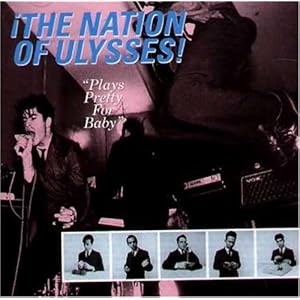
I'VE BEEN sussing the connections between urban exploration and unitary urbanism, my efforts set to the squeal and clank of the Nation of Ulysses' brilliant neo-Situationist missive Plays Pretty for Baby. In some imaginary, pre-responsibility* youth, I see myself scaling rusted ladders in enormous subterranean tunnels to the ear-gutting cacophony of “The Kingdom of Heaven Must Be Taken by Storm” as played on cheap speakers duct-taped to my belt.


AFTER ALL, what is UE if not an attempt to reclaim that which most of us never consented to relinquish? An assault on the notion of perpetual ownership? A mobilized form of squatting? A waking dream aimed at re-imagining, redrawing, redressing the levels and vistas available to us as (ex-/sub-) urban dwellers?

OLD IDEAS become compost in the new city. Christopher Payne's book (and Oliver Sachs' introduction of same) forced me to reconsider the idea of asylum – less Arkham, more sanctuary, safe bosom, respite – the idea nevertheless lost, or mistranslated across scant few generations, as the human cost vs. hard currency pendulum swung wide in the other direction, lopping off heads as it traversed its course. Now all we have are hulls, husks, mute ghosts, and beautiful photographs.

Once social institutions crumble, we simply leave the buildings that housed them to do the same. We just walk away. Or how about this: we institutionalize civic compassion only when a certain set of economic conditions are present, and when these conditions cease to be, we can no longer afford said values. So, is civic compassion a luxury? Which is to say: once the Baby Boomers are through ravaging health care and pensions, will we have to forsake those values? And will the buildings that now house these apparatuses then fall into ruin?

THE UPSIDE: burgeoning armies of young rats abandoning Krylon for Cannon, Olympus or Nikon. Their directive is shifting from redecorating to preserving, cataloguing, archiving. The thrill must be similar. There are still dark passages, security guards, and razor wire to shimmy beneath, around and over. In Japan they call it haikyo. Why do the Japanese always have terms for these things before we do?

In Peterborough the methadone clinic is in a building erected in 1848, the last all-stone edifice put up here. There's a pizza joint next door. Just down the street, in another aged building, an old-school hardware store, the kind with uneven floors and cramped aisles. I love these buildings. I'd rather see them used than explored, they're better standing than razed to make room for whatever. That's part of this town's appeal: most of it is still standing, including the alluringly fenced-off GE campus, with some buildings dating back 100 years, to when the damn thing was opened by Edison himself! Electric City, indeed! Imagine the shit that lies rusting, bricked off, forgotten, piled-upon in there. It sits there like a giant black box, a question mark. From the road, through the fence, you only get glimpses. There are railroad tracks that disappear into the solid sides of buildings.

GE's still a going concern, miraculously, that campus still active, but virtually everywhere you look there exists abandonment, past endeavour sliding to ruin. What's alluring about these places, forgotten by most, might be the inherent metaphor of imminent collapse. That's the sound of the Nation of Ulysses' music, too; what structure is present threatens to come crashing down at any moment. This is no twee screed, but a battle cry consisting of skronk, thrash, Stooge-like noise, and arty aural pastiche. There is pressure from within and without. In time, we know, there will be only strata of linoleum, paint, wallboard and rot in the case of the soon-to-fall buildings – or scattered cultural-archeological findings to be re-purposed as an aesthetic, in NOU's case: suits, hair, sound, dogma. Dig it up, pry back the plywood, dust it off and remember what others have forgotten.

(For the time being, let's refrain from considering the seismic shift, Bush to Bush, that has meant that a gaggle of poseur agitators who were, in their time, inspirational but to be consumed with a knowing wink, would now, thanks to their penchant for titles like 13 Point Plan to Destroy America, be added to watch lists, or some other such shit. Let's just hold off thinking about how unbelievably stupid that is, alright, and about what it says about how shitty our lives have become, and about all that we have lost, in many cases willingly so, and what we are leaving to our kids. Okay?)

This is all front-of-mind for me these days, I think, because of where I have returned to work, i.e. the cruel and ever-shrivelling teat of music/video retail. When in the mall I am struck by the duelling desires to revel in so much commercial excess (dance to the end of the world!) and to see it all collapse tidily into its own footprint. I want to know what the place will look like once barren and empty. What will we leave behind? What ravages will nature visit upon the place? Maple trees in the food court?

OR, FORGET the Nation of Ulysses, put them out of mind, flourish and exeunt, fire them from their post as the house band at the post-historic dinner club. You know that exercise where they play stock footage of a bear, or a lion, or some other such menacing beast, and the soundtrack is ominous, dreadful, plodding, but then they play the same clip set to, I don't know, Henry Mancini or something, and you go, “Oh man, my filmic impressions are almost completely driven by the score! I'm such a pawn!” Well, reconsider... maybe in place of the Nation of Ulysses, we play something by Jason Adasiewicz, and what we see are dust motes merrily dancing through a lovely shaft of light. Adasiewicz' vibraphone is crystalline, pure – the mood is jaunty, offhandedly fun. We are cheered by the notion that dogged beauty exists in the places where our ruin is most glaringly obvious.


* The responsibility of parenthood is no construct, of course, no arbitrary enslavement in the unfeeling gears of the capitalist, imperialist mindfuck, but rather a very real, human impulse – a need – and one which no amount of debasement, humiliation, drudgery nor wage imprisonment can nullify. Feed them! Care for them! March off toward the front in the vain hope that they will not one day have to do the same for their children. Report back to me at a later date: is there anything so fulfilling?

Thursday, October 21, 2010

Sweet Earth Flying

Marion Brown, 1931-2010

Read about Brown's life, in his own words, at AllAboutJazz.


Photo via rootstrata.com

Tuesday, October 19, 2010

1989


In 1989 I was 13 years old and just becoming politicized. I wasn't a militant young black man, but what I gleaned from PE was that there were things worth changing, and the possibility existed that we just might change them. We were going to create racial equality, harmony, understanding, tolerance. We were going to cure AIDS, eliminate hunger, colonize space, save the damn planet. The fuck happened?

Musically, holy shit -- pick a style, let me point to a seminal (or at least important, or at the very least "pretty damn good") album released that year. How about Full Moon Fever, 3 Feet High and Rising, Doolittle, Raw Like Sushi, The Stone Roses, Bleach, The Real Thing, Margin Walker and Paul's Boutique?

I don't want to fawn over what then held cache and now looks hopelessly kitschy ("the hair was funny! the pants were big!"), but try to remember what it felt like to be alive then (if applicable). It was naive and fresh and fun. We were smack in the middle of the Golden Age of Rap. Nobody had died since John Lennon. Am I remembering this right? The goddamned Berlin Wall fell! Communism was totally on its last legs. And even if the notion that The People made it happen turned out to be a romantic exaggeration (cf: Bulgarian blue jeans, heavy debt loads, inept leadership, wasteful and redundant systems... any of this sound startlingly familiar?), it sure felt like the future was a ripe oyster eager to split itself open and reveal to us, the youth, its slick and shiny treasure.

Ha ha!

Thursday, October 7, 2010

In Rotation: The Cole Porter Song Book

Calm the kids. Separate them if necessary. Serve drinks to the adults. Out the window see the late afternoon dark, the gusty wind, the leaves swirling as if in a snowglobe. Get dinner on the stove. As the kitchen heats up, take off your sweater. Boil, beat, chop, stir, fold, mix, repeat. Serve more drinks. Top up your own. Feed the babies. Wonder what you'll serve for dessert. Root around in the freezer for something, then remember the butter tarts your guests brought from the farmers' market. Breathe a sigh of relief. Be thankful for the small things. Quell another children's uprising. Top up the drinks. Call everyone to dinner. Put on Ella singing Cole Porter. Think longingly of a time before your own. Relax.

Wednesday, September 29, 2010

Seasons Change

Suddenly gone are days at the beach and driving open-windowed, even the days of backyard apple harvesting have passed me by, and what remains is the inevitability of frost. The leaves here are kaleidoscopic and the air's got that tangy bite most days. All of this signals a change in music, of course. It's not as cut-and-dried as digging a box of sweaters and woolens out of the crawlspace, but somehow, what feels right just changes.

Just in time comes a new Walkmen album, Lisbon. Nice; almost like they planned it that way. You and Me is still necessary listening anytime I'm driving around town alone on a cool night. My hand gravitates toward it every time, without fail. There's just the right ratio of bluster to stillness on that record, and every bit of me wanted the new record to retain that feel. It does, mostly. There's a tad bit less introspection, a bit more, well, joy, but this being the Walkmen, it's tinted at the edges, the incoming rot, the sense of temporariness in the happiness that, if I'm being honest, I'd have to say feels true to how I experience happiness. It always feels conditional. I have a black, black heart.

What else? Destination: Out! posted some seriously crazy Masabumi Kikuchi shit that made my wife physically uncomfortable last night while we both shuffled around the kitchen. A bit like the polar opposite to the Walkmen, but worth mentioning, perhaps. It felt autumnal because it wasn't sunny West Coast comfyjazz.

Sooner or later I'll probably dig out the Philip Glass, too. Because I'm deep, deep into my rut now. Before long my kids will lament my reliability. "Shit, it's fall. Dad's gonna drag out that Dracula music."

Wednesday, August 25, 2010

Wednesday, August 11, 2010

Fast Citizen


While the rest of us waste our lives watching CSI reruns on Spike, Aram Shelton is producing music with the crazed urgency of condemned man. He is an incredibly busy musician, sloughing off albums like skin cells. In that sense he's pedestrian as far as go musicians related to the Chicago scene. I hesitate to use the word scene because it reads poorly, but you know wherefrom I come. Shelton's based in Oakland now, but his associations with Chicago's well-populated improvised music scene are strong, just as Rob Mazurek's move to Brazil only made him busier in Illinois. I profiled Shelton a few years back on the now-defunct Now's the Time radio program, inspired by the debut of the trio dubbed Dragons 1976 (On Cortez, Locust Music, 2003). That was a fantastic record – it still sounds great to me – and once I started digging into the saxophonist's body of work I found a wealth of strong releases. I suppose that in the interim – the long, fallow years that followed – I've let lapse my claim to knowledge of Shelton's doings. Then Delmark sent me the second Fast Citizens record, and my interest was re-sparked.

So I'm glued to three Shelton-scented releases these days, though two of them are old news. That's the problem with this music: you can't ever catch up. There aren't enough hours and/or dollars. But you pick your spots, and the three I've chosen of late are these:

Dragons 1976, Winter Break (Singlespeed, 2006)
The trio is Shelton, Jason Ajemian on bass and Tim Daisy on drums, and the air, the expansiveness that marked On Cortez makes this record highly listenable as well. There's a feel to this unit – maybe it's timelessness, or a timeliness from another time – that suggests uncountable hours of study at the feet of dead men with long-silent horns. In and amongst all that air, that space, there's also a bite to Shelton's saxophone. Cool requires that even the smoothest quip contains a barb; sophistication is measured by the ability to disguise the point.

Fast Citizens, Two Cities (Delmark, 2009)
A sextet with a rotating leader's chair, the Fast Citizens have released only two albums but logged countless stage hours, if their playing is any indication. The cities alluded to are Chicago and Oakland, Shelton's base, since it was his turn to hold the speaking stick. You get the sense, though, that any one of these players could lead the ensemble to the Canaan of improvisational perfection. This band is tight. The compositions are good, and the improvising even better. Even if the chair only makes one full rotation, that leaves four more releases; at their established rate of an album every four years I'll be enjoying this band until my youngest graduates high school.

Aram Shelton Quartet, These Times (Singlespeed, 2010)
In which he adds clarinet to his repertoire. The quartet is like a juicy, marbled slab carved from the ham of the Fast Citizens. In musical terms, it kind of lands equidistant from Dragons and the Citizens, containing the fire and the space of both. The form and the formlessness. The great thing about this music is its ability to address needs: sometimes I want mathematical precision, other days I want something that swings. This group's got me covered.

Photo via aramshelton.com

Saturday, July 17, 2010

Answers to Unaswerable Questions

Waaaay back on March 5, Patrick, Friend of This is Our Music, dropped the following question in the comment box:

some of this stuff has been on my mind recently due to my friend jay asking for our favourite song of the 1950's. yes, one fave song from the 50's. i had to do a top 20 - 5 of those tunes were jazz numbers. what would be on your list?

Impossible!, I replied. So of course, I had to try my hand. The results:

Gerry Mulligan/Chet Baker, “Bernie's Tune” (1952)
Hank Williams, “I'll Never Get Out of This World Alive” (1952)
Horace Silver, “Room 608” (1953)
George Jones, “Why Baby Why?” (1955)
Johnny Cash, “I Walk the Line” (1956)
Sam Cooke, “Touch the Hem of His Garment” (1956)
Bo Diddley, “Who Do You Love?” (1956)
Charlie Feathers, “Can't Hardly Stand It” (1956)
Ella Fitzgerald, “Too Darn Hot” (1956)
Sonny Rollins, “You Don't Know What Love Is” (1956)
Carl Perkins, “Put Your Cat Clothes On” (1957)
Art Blakey, “Moanin'” (1958)
Eddie Cochran, “Summertime Blues” (1958)
Elvis Presley, “Mystery Train” (1958)
Dave Brubeck, “Take Five” (1959)
Ornette Coleman, “Lonely Woman” (1959)
John Coltrane, “Giant Steps” (1959)
Miles Davis, “So What” (1959)
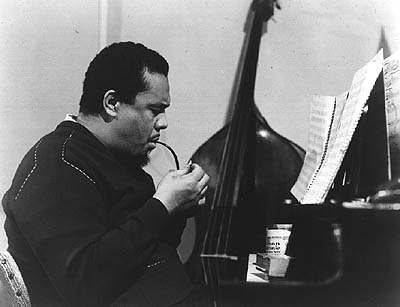
Charles Mingus, “Better Git It In Your Soul” (1959)
Marty Robbins, “El Paso” (1959)

This list is attended by a truckload of caveats, of course, most glaringly the lack of women (lonely, Ella?) If it were a list of 25, there'd have been room for Patsy Cline and Wanda Jackson, but what can you do? The parameters were handed to me and I operated within them. Also, one of my favourite records of all time, Kenny Burrell's At the Five Spot (1959), is woefully absent, but sacrifices had to be made in the interest of a full representation of the decade in question. And god, '56 and '59: hell of a couple of years, huh?

Next, I understand, we're to move to 1960-64. Problematic: the 15 or so requisite Coltrane recordings won't leave much room for all that other stuff.