Showing posts with label 2008. Show all posts

Thursday, January 22, 2009

January Miscellany


Always playing catch-up, I'll sandwich together my last several ideas for posts that never came to fruition. Let's go!

Freddie Hubbard
I'm overdue in mentioning this, but the great Freddie Hubbard (pictured) passed away on December 29. Hubbard's is an incredible body of work. The chances are, if you have anything resembling a jazz collection, you've got some Freddie in there even if you don't know it. Check the sleeves -- he was all over Blue Note in the '60s. There's nothing I could say here that my friend Mark-O isn't already saying better -- like right now, on Now's the Time on CKCU 93.1 FM.


Putting 2008 to Bed
In the interest of not dragging things out too long (too late?), and maybe beginning to concentrate on 2009, here's the last bit of '08-related chatter you'll hear from me. My favourite reissues (interpret that however you will) of the year that was were:

The Big Lie (a.k.a. Fuck Wynton)
The guys over at the always excellent Destination: Out have been doing their level best recently to shed light on the oft-misunderstood 1980s in a series of posts, but the most provocative note struck concerns the work and legacy of Wynton Marsalis (who must be mentioned if you hope to come to grips with that decade). The deeply, deeply conservative trumpeter is an incredible talent, no question, but there's little sense in denying that he's used his prominence to advance some ugly non-truths about The Music. We've debated this on Now's the Time before, and as I recall we had trouble reaching a true balance in our presentation of the argument, which boils down to Inclusiveness and Innovation (aka The Facts) vs. Wynton's Hagiography (oops, there I go again). Not one of the five of us could get behind his selective blindness. Anyway, head to D:O to read more.


Ginger Baker: All Kinds of Crazy
The prospect of crossing the Sahara to sit in on a few percussion-heavy jam sessions in Nigeria is crazy enough, but to do so in a pair of leather platform boots is plain batshit nutty. Then to seemingly get as baked as humanly possible before recording the echo pedal-aided voice-over for the documentary film which chronicles the journey is way, way beyond what most any of us mere mortals would ever in our lives consider doing. Ever. Still: entertaining.


Lastly
I'll be repping the IMC and hosting Now's the Time next Thursday, bringing a grab bag of things I've been listening to of late. Download info to follow.

Monday, January 12, 2009

Best of 2008: Songs (Part 2)


Portishead, “Plastic” (from Third)
One of the strengths of Third is that it doesn’t ride from obvious single to obvious single; it’s an album, in the most cohesive sense of that word. Extracting any one song from the front-to-back flow of the thing robs both of some of their power and grace. That said, several songs do stand up on their own, and “Plastic” is one of them. In its prematurely-truncated drum sample rests the crux of Portishead’s continuing power: the interplay of the authentic masquerading as the artificial and the artificial muddying the waters of authenticity.

The Raveonettes, “Hallucinations” (from Lust, Lust, Lust)
“Downstairs on the sidewalk I kissed Stella some more – those cliffhanger kisses, you know, when you feel as if you’ll drop to your doom if your tongues untwine – before she sank into the seat of her car and disappeared. Then I stood there for a long while, my heart a sparkler spraying light across the sidewalk.” – Johnny Miles, Dear American Airlines


The Walkmen, “On the Water” (from You and Me)
Song of the year. No point in repeating myself. Read all about my gushy love here.

Sun Kil Moon, “Tonight the Sky” (from April)
Sometimes it just takes a song ten minutes to properly unfold. Don’t rush a guy.

The Funkees, “Akula Owu Onyeara” (from Nigeria Special: Modern Highlife, Afro-Sounds and Nigerian Blues, 1970-76)
A token inclusion from one of my favourite reissues of ought-eight (more on reissues in another post). Seems that compilations of Nigerian music are a dime a dozen these days, but this one shook my ass on several occasions. Also, I just watched Ginger Baker in Africa (more on that in another post) and I feel the need to include this. I know nothing about The Funkees, but this shit is crazy.

Dave Douglas and Keystone, “Kitten” (from Moonshine)
Awesome how Adam Benjamin makes his keyboard sound like a fuzzed-out guitar, no? That’s right: no guitar.

The Vandermark 5, “Speedplay (For Max Roach)” (from Beat Reader)
The world in seven minutes. Long live Vandermark.

The Peggy Lee Band, “Scribble Town” (from New Code)
Scribbly.

DJ/rupture and Andy Moor, “One Hundred Month Bloom” (from Patches)
Notable for the sample/interpolation of “Today” by the Smashing Pumpkins. Also notable for incredibleness.

Bill Dixon and the Exploding Star Orchestra, “Constellations for Innerlight Projections (For Bill Dixon)” (from s/t)
I defy you to make sense of the spoken word bit. The song’s strength is as a showcase for this amazing ensemble, at once expansive and agile. They turn on a dime, rise to deafening heights, turn inward, crash upon themselves as though they were a single player.

Mary Halvorson Trio, “Momentary Lapse (No. 1)” (from Dragon’s Head)
Looking forward to her next release.

Matana Roberts, “Nomra” (from The Chicago Project)
Wonderful player, wonderful band.

Francois Carrier, “Experience” (from Within)
Not as monolithically impressive, perhaps, as “Core,” the (aptly-named) forty-minute centerpiece of Within, but a beautiful piece of group improvisation nonetheless.

Angles, “Every Woman is a Tree” (from Every Woman is a Tree)
Stylistic similarities to On Cortez by Dragons 1976 – a group of contemporary players mining the fertile nexus of hard bop and free music as you might’ve found on mid-‘60s Blue Note (think bands featuring Jackie McLean and Bobby Hutcherson), while still finding new directions to push the sound. I can’t recommend this album enough.

The Bitter Funeral Beer Band, “Chetu” (from Live in Frankfurt ’82)
“A bit drum circle-y,” said Mark-O. Maybe so. But I keep getting drawn further and further into this space where world and free music meet.

Thursday, January 8, 2009

Best of 2008: Jazz/Improvised

Tonight I convene (telephonically) with my IMC peers as we run down our picks for the best improvised recordings of 2008 on Now's the Time. It's on CKCU at 8:30 pm EST, or head to our myspace page after the fact for a recap. We'll record it, too, so watch this space for DL information.

My picks, of course, were laced in among the rock and pop stuff throughout December's 25 posts, but I'll try to elaborate on air, and probably play a couple of tracks from my top 2 or 3 choices.

Tuesday, January 6, 2009

Best of 2008: Songs (Part 1)


Those of you already in possession of the much-coveted TiOM year-in-review CD will have anticipated this post, and it will prove as anticlimactic as snow in winter. But we soldier on.

Every one of the previously-posted album picks is represented by a song here, as are a few strong-but-not-top-25-strong albums. When it comes to the improvised stuff, the songs chosen, while all very good examples of the artists’ work, are often concessions to the length of a CD-R rather than the track I enjoyed most.

In order of appearance on the CD (that is, the order dictated by flow, and not a hierarchical ranking):

Love is All, “New Beginnings” (from A Hundred Things Keep Me Up at Night)

I’m a sucker for anything this spastic and unhinged. The addition of saxophone seals it. Big inning, indeed.

Vampire Weekend, “Oxford Comma” (from Vampire Weekend)

The Oxford Comma, also known as the Serial Comma, provides the basis for one of the catchier songs on VW’s debut.

Ra Ra Riot, “Ghost Under Rocks” (from The Rhumb Line)

If I’d put together a top 26, Ra Ra Riot’s The Rhumb Line would’ve squeaked onto the list. A buoyant and catchy collection by a band prominently featuring cello and violin, Rhumb has worked its way into increased rotation at TiOM HQ in recent weeks after laying neglected for a couple of months. Danceable and only slightly twee, RRR crib from the right set of notes, namely New Order, Kate Bush and the Flying Nun roster.

The Whigs, “Hot Bed” (from Mission Control)

Was the Whigs’ Mission Control as front-to-back strong as the rest of the albums on my list? No, no it was not. Do I love “Hot Bed” because it shows the band at their Replacements-aping best? Yes, yes I do.

The Night Marchers, “Closed for Inventory” (from See You in Magic)

Keep doing how you do, John Reis.

The Hold Steady, “Constructive Summer” (from Stay Positive)

God bless Craig Finn for his ability to toss off a line like, “Me and my friends are like double whiskey-coke, no ice.” When Stay Positive began this strong, it was clear Boys and Girls in America was no fluke.

Titus Andronicus, “No Future, Part II – The Days After No Future” (from The Airing of Grievances)

Absolutely perfect for late night air drumming while sitting before your PC and assembling a list of your favourite songs of the past year.

The Dodos, “Red and Purple” (from Visiter)

Visiter [sic] in a nutshell: clangy, tuneful, good.

Plants and Animals, “Bye, Bye, Bye” (from Parc Avenue)

By roughly the three-quarter point of Parc Avenue, I found myself overcome by the scent of patchouli, but “Bye, Bye, Bye” is grandiose and bombastic enough to disarm my defenses.

The Gaslight Anthem, “Miles Davis and the Cool” (from The ’59 Sound)

Mid-tempo longing and regret from Jersey Boss-worshippers.

The Baseball Project, “Past Time” (from Volume 1: Frozen Ropes and Dying Quails)

“Past Time” contains all of the Baseball Project’s DNA, acting as something of a sampler plate of the tracks that will follow. Half the fun of the album, and this song in particular, is sussing out how many of the names and stories you’re familiar with already, and how many you’ll have to look up at baseball-reference.com.

Bon Iver, “Skinny Love” (from For Emma, Forever Ago)

Hands down the best use of a warbly, multi-tracked falsetto in 2008.

Frightened Rabbit, The Twist (from The Midnight Organ Fight)

Perfectly evokes to the sense of unease and tension in the moment described, until it builds toward something approaching confidence and the narrator declares, damn it, I want you to want me.

The Constantines, “Million Star Hotel” (from Kensington Heights)

One of the highlights of Kensington Heights, about equal with “Trans Canada,” I’d say, but the space and tension of “MSH” was better suited to my purposes.

Wolf Parade, California Dreamer (from At Mount Zoomer)

I think we can all agree that indie and prog now share a bed, and sometimes it’s an uncomfortable arrangement, but often, as when Wolf Parade drop in that bubbly electric piano, it delivers pure pleasure.

Thursday, December 25, 2008

#1

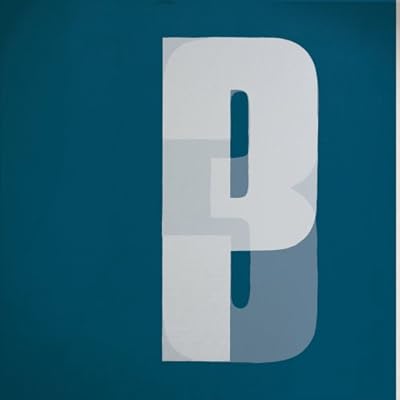
Portishead, Third (Mercury/Island)

There was no reason to expect that Portishead would ever be relevant again. They'd had their heyday, inspired a decade or more of electro-acoustic mood music perfect for shopping or sipping caramel macchiatos (that music's blandness is not Portishead's fault), and promptly faded away. Fait accompli, right? And even if Adrian Utley, Beth Gibbons and Geoff Barrow were to reunite, they'd only be banking on past glory (box), right? Well, not so fast, it seems. A decade removed from their last perfomances together, the trio decided they still had something vital to offer, and lo, they were right.

Third is distinct from both of their previous studio albums, as well as their 1998 live release. They have sloughed off all signs of trendiness: gone are the scratches, the spy soundtrack samples, the vague '90s-ness of it all. What remains is the remarkable density of their sound, a deceptively smooth-seeming yet incredibly complex construction of live instrumentation and electronic augmentation. And still present is Beth Gibbons' voice, at once so strong and yet so vulnerable, the wounded ingenue, a singing style seemingly torn from a time now decades past (when I first head Dummy, almost FIFTEEN YEARS AGO, I was convinced the vocals had been ripped from a dusty 78 the producers had found at a rummage sale somewhere). But otherwise, so many references to who Portishead once were have been scrubbed away that Third represents an incredible act of reinvention.

In the past Portishead had, despite its air of longing and desperation, the ability to lull listeners. For all its inventiveness, this was ultimately the calling card of trip hop, the genre Portishead were said to have helped found: the easy tempi were for sipping beverages, for kicking back; for chilling. But Third is less Blue Room in a London club than it is Berlin warehouse-cum-sound-studio. It bristles, crackles, bucks and pushes. It unsettles. First single “Machine Gun,” with its rapidfire drum machine beat, is unapologetic krautrock. “Magic Doors” is backed by a wash of psychedelic tape-splice sound.

Third is so breathtakingly strong, so intricate and dark that it demands a rethink of Portishead's relationship to their earlier work. They were, I think, further ahead than we realized, more innovative and less interested in creating “a sound” than they were in exploring the possibilities of Sound. Dummy and Portishead suggested it, and Third has at last confirmed it: a familiarity with Portishead is essential to understanding the state of the art of music in the first decades of the twenty-first century. For most of us that century began about 7 or 8 years ago (probably it began on September 11, 2001, just as the twentieth century effectively began on June 28, 1914), but for Barrow, Gibbons and Utley, it started nearly a decade earlier, when they began their work together. The question is whether or not they can remain ahead of the curve, and what sort of art will result from their prescience. For the time being, we have Third, and we are fortunate, because Portishead could have easily called it a career ten years ago, when it seemed as though they had nothing left to prove.

Wednesday, December 24, 2008

#2

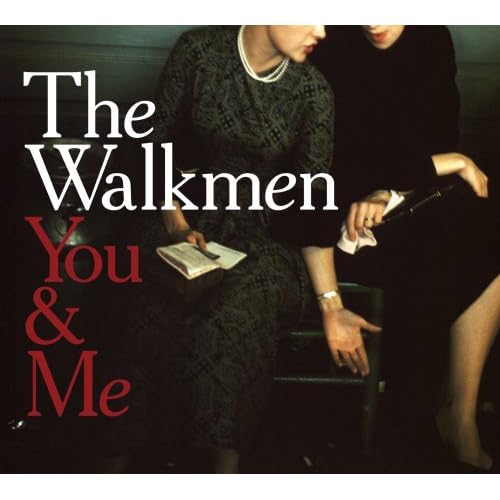
The Walkmen, You and Me (Gigantic)

The buzz of a guitar's reverb in the skin of a drum, the rattle of a kick pedal as secondary percussion, the cracking of Hamilton Leithauser's voice at just the right moments, the rich hum of the organ... these are the subtle aural pleasures of You and Me. The intellectual pleasures are perhaps more acute; like a persistent stitch in your side, the Walkmen are here to remind you that aging isn't easy, and sure as hell isn't pretty, but it's unfailingly poignant, and real to boot. Y+M is an album-length rumination on that abrupt transition when you realize that you don't care if you look your age, because a) you can't be bothered anymore, and b) maybe there's an iota of dignity in not being 26 (or 29) anymore. The Walkmen sound tired, properly tired, and that results in a dropping of affectations. It sounds right, because damn it, who among us isn't weary? One foot in front of the other, we'll get by. They've been listening to Leonoard Cohen – we've got the proof right here – and they sound like it, courting melancholy and mule-headed hopefulness (the impossibly pretty “Canadian Girl”) in equal measure. When an album keeps its hat on for so much of its running length, the outbursts are all the more startling and meaningful. You and Me is a magnificent, well-tailored coat with fraying cuffs. It is elegant and desperate.

And then there's “On the Water,” which is about as perfect a song as I've ever heard. Its muted shuffle-step opening perfectly evokes, as Leithauser sings, “walking down this dirt road, watching at the sky, 'cause it's all I can do.” And when, at about the 2:13 mark, the song erupts like a shower of sparks, your heart does likewise, because you feel in an instant that you have permission to shout, ragged-voiced and pop-veined, every last damn thing that you've held back since things started to appear in your mind's rearview mirror. It is the wedding speech you've always wanted to give, the eulogy you hope to one day deliver, your tie askew, to a room full of gape-faced people. “On the Water” knows that you could have been somebody, and You and Me says you might be yet, but either way you'll have these songs; songs like heirlooms, songs like friends.

Tuesday, December 23, 2008

#3

Bon Iver, For Emma, Forever Ago (Jagjaguwar)

Every great album needs an equally great creation story, the myth of its genesis, the raw material of its run at immortality. For Emma, Forever Ago passes that test. Specifically, it is the end result of a broken relationship, a disbanded indie-folk outfit, and a period of intense isolation in the snow-driven Wisconsin woods. Justin Vernon, who adopted the Bon Iver moniker as a manglicized version of the French for good winter, endured a run of bad breaks, like many of us do, and reacted in a way that more of us should: he turned it into something of lasting value. Alone in that cabin, he might have made the worst sort of moping bedroom folk, but instead was able to hew something from the ice and wood and solitude that can only be called backwoods soul. His multitracked falsetto shimmers like windowpane frost, etched delicately atop solid rhythms punched out of an acoustic guitar, and spiced with a few horns, some spare drums and the odd electric guitar twang. There are the inevitable Iron & Wine comparisons, and they're valid, but only if you mean the mature Iron & Wine, as on The Shepherd's Dog, where the hushed folk plucking is seasoned with a broader musical palette. For Emma... is a lush, beautiful listen, the sort of album that worms its way into your life so that you find yourself conforming to its rhythms; background listening becomes focused listening. The strength of this record is in its ability to hold your attention, and I think it does that because of its unique genesis. It seems obvious to me that Vernon was writing and recording these songs for himself first and foremost, and that makes us spies on a series of very private moments. When an artist is this naked, the product can't help but prove compelling.

Monday, December 22, 2008

#4

Angles, Every Woman is a Tree (Clean Feed)

For a nation of nine million souls, Sweden has placed a proportionally high number of albums on this list – Love is All, Bengt Berger, and the Raveonettes have already achieved the great distinction of being named TiOM top 25ers. Add alto saxophonist Martin Kuchen and his latest project, Angles, to that number. Every Woman is a Tree is a stark and dark, Matthias Stahl's vibraphones darkening the corners of this roiling live collective improvisation. This is free music as Freedom Music; protest and dissent circa now. Thou ancient, thou free rouses Sweden's national anthem; this sextet certainly bears that second part to heart. The performances are tense and tight, the tunes aren't frothy but have enough head to satisfy. All of it adds up to my favourite free/improv/jazz recording of 2008 (that it came from an artist and group I'd never before heard of makes it all the more pleasing). ((And once again, Clean Feed proves itself one of the most interesting labels out there.))

Sunday, December 21, 2008

#5


Wolf Parade, At Mount Zoomer (Sub Pop)

Not to repeat myself, but I was prepared to be disappointed by the follow up to the immensely satisfying Apologies to the Queen Mary. Well, I needn’t. At Mount Zoomer is almost completely devoid of a single, lacks the “naive, anthemic bluster” of its predecessor, rocks just a little bit less than …Queen Mary, and comes packaged in one of those shitty paperboard sleeves that’s impossible not to damage the first time you open it. Which is all to say that it’s just as good as Wolf Parade’s debut. I’d stop short of calling it better, because as debuts go, theirs was stupefyingly good. Zoomer is more of an album, though, in that it hangs together all of a piece, and several songs feel as though their primary purpose is to set a tone for the big set pieces (California Dreamer, Kissing the Beehive). All in all, it’s compelling, the rare album demanding a front-to-back listen in a way that’s commendable – weren’t we supposed to have witnessed the death of the album several times over by now? Wolf Parade didn’t make a second installment of their debut, though that would have been an achievement in itself. What they did instead was to grow up a bit and produce an incredible record shorn of the urgency of its antecedent, but one which is nevertheless deeper, more nuanced, and more patient. In short, they followed up one triumph with another, completely different one. I can’t wait to see what they do next.

Saturday, December 20, 2008

#6


The Raveonettes, Lust Lust Lust (Vice)

I hereby nominate the Raveonettes to score every future David Lynch project, and while they’re at it, why not go back and provide new music for everything he’s already done? Those would be DVDs worth shelling out for. On Lust…, the ‘nettes seem to have clarified their purpose, shedding much of the bloat that troubled their last long player, and rededicating themselves to their role as recombinant masters of American Kitsch (as is so often the case, it takes outsiders to perfect this shit); promoters of trash as high art. With songs that flare up like magnesium, mechano-drums, robo-Swede vocals and fuzzy, tinny guitar, Lust… is perfect homage to the art of rock & roll self-invention. Harmonized vocals lie like bedrock beneath spiky guitars, and Buddy Holly smiles from the great beyond. So might Luxe Interior, if he were dead. Like Mulholland Drive, there’s a chance I’m not understanding everything that’s happening here, but I’m sure as hell enjoying it. Now, how about it: The Raveonettes do Blue Velvet?

Friday, December 19, 2008

#7


Frightened Rabbit, The Midnight Organ Fight (Fat Cat)

Nervy, rollicking, convulsive alt-folk-indie-rock. The best thing going in Scottish guitar pop. Equal parts hope and despair. Lush, tic-driven, and catchy. Hum it when you’re up, bellow it when you’re down. [Aw, jeezus, does anybody actually read this stuff?]

Thursday, December 18, 2008

#8


The Vandermark 5, Beat Reader (Atavistic)

Ken Vandermark’s mugshot ought to accompany the definition of “restless” in your Colliers or your OED. In jazz terms, he’s as promiscuous as they come, leaping from project to project, starting new bands, resurrecting old ones. – one-offs, touring ensembles, tributes, film music, intriguing collaborations… If it’s adventurous, he’s game. Once the tally is complete, I expect he’ll have released hundreds of recordings. But for better than a decade, he’s always returned to the Vandermark 5. That any working jazz unit has endured today’s climate for eleven years is truly remarkable; that it has managed to hold Vandermark’s interest is miraculous. There have been lineup changes, of course, but the core dictum of pushing free music in all directions has remained undisturbed. The V5, as it currently stands, is the exciting Dave Rempis on alto and tenor saxophone, Fred Lonberg-Holm on cello and electronics, Kent Kessler on bass, Tim Daisy on drums, and Vandermark, who here sticks to the low end of the register, playing baritone sax and clarinet. It’s a good choice, because he spends much of Beat Reader’s 69 minutes exploiting the guttural qualities of the baritone to an effect similar to his work on Bridge 61’s (excellent) 2006 release Journal, which is to say that a lot of the time the thing flat-out rocks. Vandermark’s gift is his combinatory approach; simply, his palette is larger that most. Punk, rock and funk are as ripe for pillaging as are blues, jazz, classical, what have you. This inclusiveness is what has always marked the great Vandermark 5 releases (Single Piece Flow, Target or Flag, A Discontinuous Line), and here it means that the quintet veer from spastic energy to containment and austerity in the blink of an eye. They are simultaneously controlled and unhinged; propulsive and passive, as appropriate. Lonberg-Holm’s cello is capable of centering the proceedings in a way that Jeb Bishop’s guitar could not. Similarly, Rempis’ tenor pushes things further into the funk realm. All in all, it is what we have come to expect from the V5: more of everything, the world in an hour. I wouldn’t dare slight Ken Vandermark for his restlessness and his creative hyperactivity. It simply results in too much incredible music. But I do hope he always calls the Vandermark 5 home.

Wednesday, December 17, 2008

#9


Vampire Weekend, Vampire Weekend (XL)

So much advance hype preceded the release of Vampire Weekend that anything less than Album of the Year plaudits might be seen as a letdown. Well, whatever, they made a very good album, a wry, confident, highly listenable pop record replete with those much-discussed African pop influences. It’s like extras from a Bret Easton Ellis book put out a record, and though you long to hate them for their pedigree and their unearned trust fund security, you can’t deny the songs. Vampire Weekend pull off the neat trick of harkening back to a simultaneously ironic and carefree time that likely didn’t actually exist, and making you feel nostalgic for it just the same. Dance, deny, repeat. We knew "Mansard Roof" and "Cape Cod Kwassa Kwassa" were good; turns out they weren't complete flukes. "Campus," "Oxford Comma" and "A-Punk" are just as solid. Dance, dance, dance.

#10


Dave Douglas & Keystone, Moonshine (Greenleaf)

No surprise here, really, as Douglas seems to show up annually on my list, he just continues to evolve and to impress. Keystone is the band which originally came together around the 2005 album of that name, a project inspired by the silent films of Roscoe “Fatty” Arbuckle, he of the infamous Hollywood scandal, but this music is genuinely affectionate toward Arbuckle’s work. The 2005 disc even included a DVD containing an Arbuckle short film. In 2008 the band remains the same save for the keyboard chair, where Adam Benjamin replaces Jamie Saft. DJ Olive is present again, and he’s given more room to provide atmospherics and quasi-instrumental interjections than he was on the first album. John Kelman of AllAboutJazz.com sums it all up nicely:
What makes Moonshine ultimately such a success [...] is Douglas’ ability to cloak avant-garde concerns in accessible surroundings. As deep and challenging as anything he’s ever recorded, Moonshine remains an album that’s as much food for the heart and soul as it is for the mind, and continues Douglas’ remarkably unbroken string of superb and uncompromising releases.

Monday, December 15, 2008

#11


Francois Carrier, Within (Leo)

Within is the sound of a trio of musicians (Carrier on alto and soprano saxophones, Jean-Jacques Avenel on bass and thumb piano, and Michel Lambert on drums, recorded live in Calgary) exhibiting group awareness and musical intuition so strong that it verges on telepathy. “The Moment” and “Experience” bookend the 40-minute “Core,” a staggering piece of creation-in-motion, an improvised statement of impressive depth and such obvious elation for the players that one is tempted to invoke some pretty heavy names as comparison points. But let’s resist that temptation and call it simply “singular,” perhaps even rapturous, and absolutely compelling.

Sunday, December 14, 2008

#12


Love is All, A Hundred Things Keep Me Up at Night (What’s Your Rupture)

Just like their debut Nine Times That Same Song, this year’s A Hundred Things… plays out like a breathless run-on sentence, a harried and frenzied burst of energy, my two-year old daughter’s sugar rush babblings set to chugga-chugga post-punk guitars, the skronking saxophone, nervous tic drums, bubbly keyboards and Josephine Olausson's amateurish (in a good way) English-as-a-second-language vocals all competing to see who can get to the end of the song first, and even when they do slow it down, like on "When Giants Fall" or “Last Choice,” they make it so damn poppy-sweet, but not too TOO sugary, that you probably dance just as hard as you do to the fast stuff, so the cumulative effect is one of, yes, YES I like this, and after the second or third listen you’re bleating right along with Jansson, doing the freak-spank, playing rhythm guitar on a wooden spoon (or broom or hairbrush), and when, after a scant 32 minutes, the whole thing is over, you think to yourself, well THAT was fun.

Saturday, December 13, 2008

#13


Matana Roberts, The Chicago Project (Central Control)

Chicago-born saxophonist Matana Roberts came to notice playing with the trio Sticks and Stones (with Chad Taylor and Josh Abrams) whose 2004 album Shed Grace was one of that year’s best. In 2008 she fronts an impressive quartet comprised of Jeff Parker on guitar, Abrams on bass and Frank Rosaly on drums. The group’s first release is The Chicago Project, a record notable for the quality of its quartet pieces as well as the three sax duets which place Roberts alongside the legendary Fred Anderson.

#14


The Hold Steady, Stay Positive (Vagrant)

We’re still swooning over Boys and Girls in America, to be honest. That record’s bless-the-losers vibe, its rousing acceptance of advancing age and casual transgression, its ruddy heart, and its songs, were so on, so right, that it’s one of the rare records I’m listening to two years later. So expectations for Stay Positive were high, and for the most part, Craig Finn and co. deliver again. Opener “Constructive Summer” hits like a hot mid-afternoon beer buzz, and scores bonus points for referring to Joe Strummer as a saint. Then you find yourself in the midst of “Sequestered in Memphis,” which should already be playing on classic rock stations across the land on the strength of its piano-organ-guitar front line and its sing-along chorus. We’ll call “One for the Cutters” a brave misfire, because this band’s done enough to earn some of our patience, but yeah, the harpsichord (!) is a mistake. Things chug along like that, though, with pinches and dashes of a lot of the songs you’ve loved since you could turn on a radio yourself. It doesn’t all really gel again until track 8, “Stay Positive,” where the bile-and-nostalgia lyrics and the guitars mesh with the shouted “whoa-oh-ho-ho” chorus, and you begin to wonder if you haven’t shouted along with that chorus sometime in the hazy past, somewhere you can’t name. The Hold Steady frequently arouse such false memories; they’re sometimes called classicists, and sometimes labeled nothing more than a bar band, but as long as we have need for bars, we’ll have need for bar bands, especially ones as good as this. At their core such groups are made up of people who’ve obviously spent their lives listening to Big Albums, and hoping they’d make one themselves someday. These guys did – it was called Boys and Girls in America – and now they’ve followed it up with a Damn Good Album. It could never be as invigorating as hearing Boys and Girls… for the first time, but Stay Positive is the record that confirms that this band is one to grow older alongside. I said it in ’06, and I think it holds true: The Hold Steady’s failures seem terribly real, and their victories kind of feel like your own.

Thursday, December 11, 2008

#15


The Night Marchers, See You in Magic (Swami/Vagrant)

John Reis seems to know only one thing, and that’s how to play the world’s best grimy rock & roll. The man also known as Speedo has been the drive behind Drive Like Jehu, the mighty Rocket From the Crypt, the Sultans, the Hot Snakes, and now, having closed the lid on all those bands, he’s formed the Night Marchers. See You in Magic is the band’s debut, another winner in the Reis catalog, 13 more songs to add to the canon. The guitars on Reis-related records always sound the way angry guitars should sound: raw, loud, taut. The drums are big, the vocals are Reis’ trademark growl and yelp, and the songs are tuneful and tight. The loss of RFTC was lamentable for fans of no-bullshit garage rock. Similarly, both the Sultans and the Hot Snakes seemed incapable of wrong moves. They’re all gone now, but See You in Magic points toward a future where Reis continues to provide just what’s needed. Here’s hoping the run continues, though it shows no signs of doing otherwise.

Wednesday, December 10, 2008

#16


Bill Dixon with the Exploding Star Orchestra, Bill Dixon with the Exploding Star Orchestra (Thrill Jockey)

Head Exploding Star Rob Mazurek continues to enjoy an exciting career, neatly treading the line between Chicago’s fertile post-rock scene and all-out free jazz. Indeed, he provides a handy figurehead for that nexus, in that the point he occupies is now so thoroughly associated with both of those musical movements that they have probably now, or will soon merge altogether. For the second ESO release, Mazurek was lucky enough to attract the attention of Bill Dixon, who not only agreed to play on the set, but composed the two-part suite (“Entrances”) which opens and closes the album. Sandwiched between them is Mazurek’s “Constellations for Innerlight Projections (For Bill Dixon)”, so all in all it made sense to credit the project to Bill Dixon with… As with last year’s amazing We Are All From Somewhere Else, the Orchestra, made up of 13 Chicago improvising music scenesters, employ everything under the sun, from free blowing to melodic noodling to good old-fashioned space-age big band swinging, and once again flutist Nicole Mitchell is on hand to nearly steal the show. But Bill Dixon holds his own, too, and the end result is a thrilling recording which rewards repeat listens. Given the ever-present need for new and unpredictable sounds, it is perhaps no surprise that free jazz is alive and well; the big surprise is that its health is due in some measure to the mathrockers. With each daring and fresh release, they threaten their own oblivion, bound to become instead simply the next generation of improvisers. This record feels like a tacit acknowledgment of that very fact, a nod of appreciation from an elder to his natural descendents.